



Registered Voter Mailing List
The United States stands as one of the few countries that has consistently embraced democracy since its founding, with citizens playing a central role in determining who will represent their interests. Unlike many nations that have undergone significant changes in governance structures, the U.S. has maintained a democratic system from its inception, where the people hold the ultimate power to select their leaders. This democratic principle extends across every level of government, from local municipalities and counties to state governments and the national stage. Whether it involves electing a mayor, a governor, or the president of the United States, the people’s voice has always been integral to the selection process.
At the heart of this democracy lies the election process, a cornerstone of American governance. Elections provide a platform for citizens to express their preferences for public office holders, and it is during these elections that campaigns become a powerful tool for generating awareness about candidates and their platforms. These campaigns are designed not only to inform but to persuade voters about why a candidate is best suited to lead, based on their policies, ideologies, and proposed solutions to the nation’s challenges. Throughout history, elections in the U.S. have become more sophisticated, incorporating modern technology and communications to reach a broader audience and increase participation.
The act of voting itself has evolved significantly over the years. In the past, voting required individuals to travel to a designated polling place, often during set hours, and cast their vote in person. However, the United States has made significant strides toward expanding access to voting, ensuring that all citizens, regardless of their circumstances, can participate in the democratic process. The introduction of absentee and mail-in voting options has been transformative, providing an alternative for those who might otherwise face barriers to voting in person, such as individuals with disabilities, elderly citizens, and those with mobility challenges. This shift has also benefited people with irregular work schedules or those who live far from polling stations, ensuring that every eligible voter can cast a ballot without undue hardship.
Today, voting by mail has become a standard practice in many parts of the country, allowing for greater inclusivity and convenience. The option of voting by mail means that individuals do not need to be physically present at polling locations, allowing people to vote when it is most convenient for them within a given window. This system enhances accessibility, allowing individuals who face personal or professional challenges to participate in elections without risking their job security or personal health. The shift toward expanded voting methods reflects a continued commitment to making the election process more democratic, ensuring that every eligible voter has the opportunity to make their voice heard, no matter their personal situation or geographic location.
In addition to increasing accessibility, the evolution of voting practices in the U.S. also speaks to the larger idea of ensuring that democracy remains inclusive and representative of the diverse population. As technology continues to advance, it is likely that the voting process will evolve further, with potential innovations that streamline voting, increase security, and continue to support the democratic principles upon which the nation was built. Through these ongoing efforts, the U.S. continues to strengthen its commitment to democracy, ensuring that all citizens have the means and the opportunity to participate in the vital process of choosing their leaders.
However, the democratic process is ongoing work. The United States is now at a point where the entire nation is “between elections” in terms of voting for the country’s leadership, the Presidency. But other elections are always ongoing, such as local, county, and state elections. And, of course, the preparations for a national election will be underway this year as the massive campaign machines of the two dominant parties once again lumber into action while many independents also participate in the democratic process.
Sprint Data Solutions Worldwide Marketing has worked with political organizations for many years to help keep the machinery of democracy operating. As the nation prepares for another election, Sprint Data Solutions Worldwide Marketing is prepared to do so again.
About Sprint Data Solutions Worldwide Marketing
Sprint Data Solutions Worldwide Marketing was born from the vision of a disabled veteran who sought to transition from a life of military service to a new mission: fostering economic growth and supporting businesses that drive the economy. After years of defending the nation and making sacrifices for the greater good, the founder decided that the next step would be to move away from military conflict and contribute to the nation’s prosperity by helping businesses expand their customer bases. With a firm belief that the success of these businesses could propel the economy forward, the decision was made to remain in Las Vegas, a city known for its entrepreneurial spirit, and start a local business dedicated to delivering high-quality marketing solutions.
In its early days, Sprint Data Solutions Worldwide Marketing began as a small, focused operation, providing direct mail marketing services to local businesses. At the time, digital marketing had yet to gain widespread traction, and direct mail was the primary channel for businesses looking to reach their target audiences. Recognizing the potential in direct mail, the company quickly built an impressive database, collecting and organizing valuable contact information, including names, mailing addresses, and key demographic data. By sharing these carefully cultivated assets with clients, Sprint Data Solutions enabled businesses to target specific consumer groups with a high degree of precision, resulting in measurable growth and a strong reputation for delivering results.
The company’s early success in direct mail marketing laid the foundation for steady growth. As their client base expanded and demand for their services increased, Sprint Data Solutions Worldwide Marketing began to expand its operations. Starting with coverage across the continental United States, the company soon added Alaska and Hawaii, offering national reach. With a growing understanding of data and consumer behavior, the company seized opportunities to expand internationally, entering markets in Canada and Mexico, before taking the bold step of serving clients across the European Union, including major markets like France.
As the marketing landscape evolved, so did Sprint Data Solutions. The company’s ability to adapt to changes in the industry, particularly the rise of digital marketing, positioned it as a forward-thinking leader in the field. Embracing technology, the company integrated digital marketing solutions into its services, offering clients a comprehensive approach that combined the best of both worlds—traditional direct mail and cutting-edge digital strategies. This strategic shift not only expanded the company’s service offerings but also enabled it to continue growing in an increasingly digital world, ultimately becoming a global player in the marketing industry.
Today, Sprint Data Solutions Worldwide Marketing is proud to operate as a full-service marketing solutions provider, offering a vast array of services tailored to meet the unique needs of businesses around the world. With a team of dedicated professionals boasting over 50 years of combined experience, the company has built a reputation for excellence, innovation, and customer satisfaction. Its comprehensive database management, highly-targeted marketing campaigns, and unwavering commitment to helping clients succeed make Sprint Data Solutions Worldwide Marketing a trusted partner for businesses seeking to expand their reach and grow their customer base.
Elections Are Different In The New Millennium
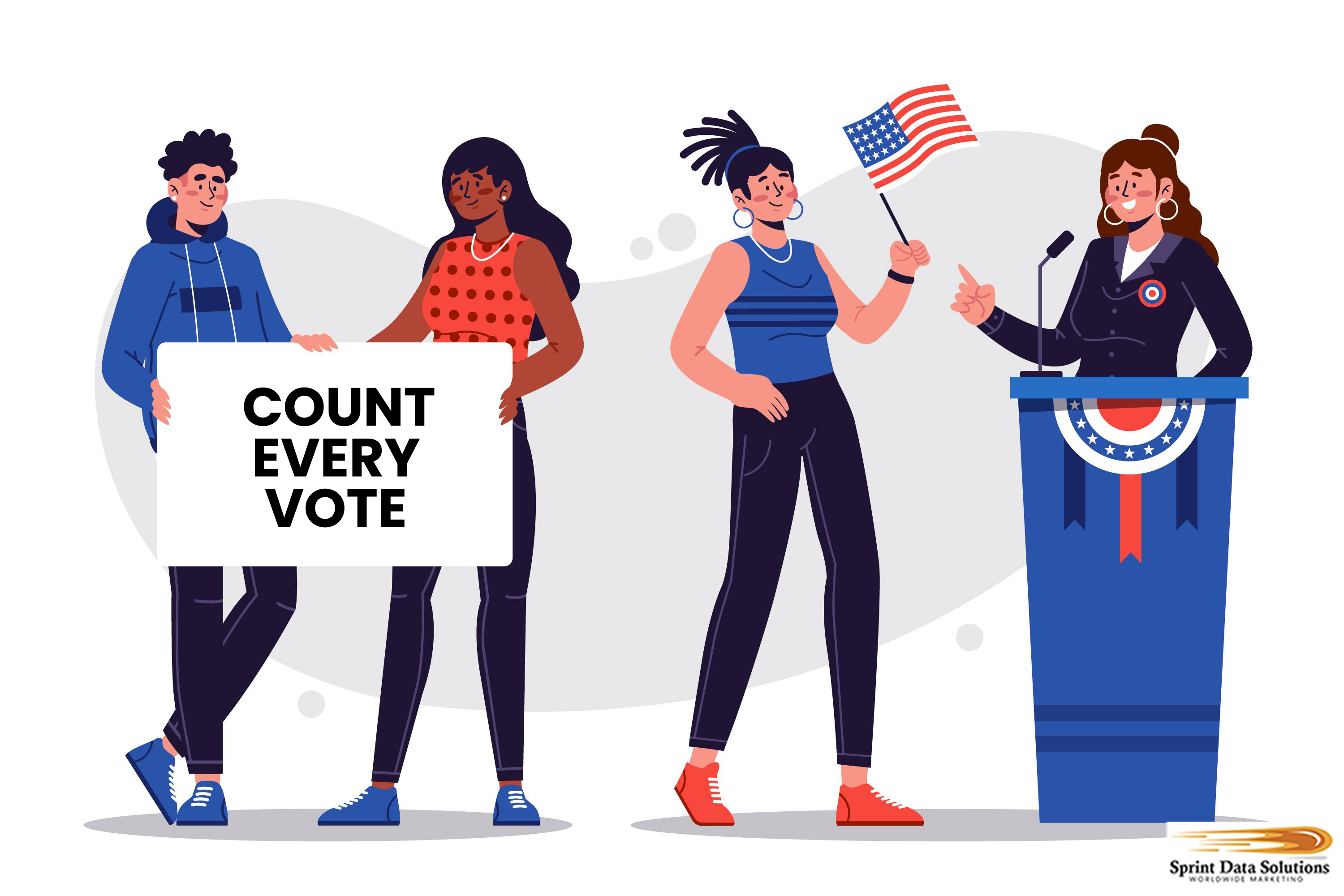
The democratic process has undergone significant transformation over the years, particularly in the ways political campaigns engage with voters. With the rise of the Internet, new digital platforms have emerged, reshaping how candidates connect with their constituents. This shift has brought both opportunities and challenges, as traditional methods of campaigning, such as television and radio, are now joined by a multitude of online channels. Despite these changes, the core goals of political campaigns remain largely unchanged. Whether at the local, state, or national level, candidates must convince voters that they are the most qualified person for the position they seek. This requires establishing credibility through a combination of personal character, professional qualifications, and the policies they advocate for.
At the heart of any political campaign is the need to build trust and communicate a compelling vision for change. Candidates must articulate their platforms clearly, promise reforms, and demonstrate how they will fulfill their commitments once in office. Effective campaigning involves not only positioning oneself as the right choice but also showing a deep understanding of the issues that matter most to the electorate. The promises made during a campaign must resonate with voters, who are often looking for a leader who can bring about meaningful change and improve their quality of life.
Historically, political campaigning was a personal endeavor, centered around face-to-face interactions with voters. In the early days of democratic governance, candidates relied heavily on physical visits to constituencies, making speeches, shaking hands, and personally engaging with the electorate. Print media such as pamphlets, posters, and flyers helped supplement these efforts by providing detailed information about candidates’ platforms and positions. These interactions were often limited by geography and the size of the audience, as communication technology had not yet advanced to the point where candidates could easily reach larger groups.
The advent of radio in the early 20th century revolutionized political campaigns. Radio allowed candidates to broadcast speeches, interviews, and debates to a much wider audience than ever before, effectively bypassing geographical barriers. Radio also introduced the idea of a candidate’s voice being part of their public persona, allowing voters to hear their views directly and gain a better understanding of their character and ideas. The rise of radio also led to the development of political advertising, with campaign ads becoming a staple of election seasons.
Television took the evolution of political campaigning even further. With the ability to reach millions of viewers in their homes, TV became the primary medium for political messaging. The visual aspect of television allowed candidates to present themselves not only through their words but also through their image and demeanor. Televised debates, speeches, and commercials became critical components of campaigns, and candidates learned to use the power of visual media to influence voters’ perceptions. Television also introduced the importance of media strategy, as candidates needed to manage their image and create narratives that resonated with the public.
In recent decades, the rise of the Internet has brought about another seismic shift in political campaigning. Social media platforms, websites, email marketing, and online advertisements now allow candidates to target voters with unprecedented precision. Digital campaigning has democratized access to political information, allowing even grassroots candidates to raise awareness and mobilize supporters with relatively low costs. Social media platforms like Twitter, Facebook, and Instagram provide a direct line to voters, enabling real-time communication and interaction. Political campaigns have adapted to these new platforms by engaging in data-driven strategies, using voter data and analytics to personalize outreach and better tailor their messages.
Moreover, digital platforms have made it easier for voters to interact with candidates, contribute to campaigns, and participate in discussions. However, the rapid evolution of digital campaigning has raised new challenges. The spread of misinformation, privacy concerns, and the potential for digital manipulation have prompted debates over the ethical use of technology in elections. Despite these challenges, the Internet has undeniably expanded the ways in which political campaigns can reach and engage with the electorate, making it an essential tool for modern-day campaigning.
The evolution of political campaigning reflects broader shifts in technology, communication, and society. From the days of personal visits and print media to the era of radio, television, and now digital platforms, campaigns have continually adapted to the changing media landscape. As new technologies continue to emerge, it will be interesting to see how campaigns evolve further and how they continue to shape the democratic process in the future. Regardless of the platform or the medium, the goal remains the same: to convince voters that the candidate is the right choice to lead and to bring about the change that voters seek.
With the advent of the Internet, the landscape of campaigning and marketing has undergone a significant transformation, with digital platforms now enabling much more targeted and personalized outreach. The Internet’s ability to gather vast amounts of user data has revolutionized how businesses and organizations can engage with their audiences. Through activities such as account creation, membership sign-ups, and even simple website visits, individuals leave behind a digital trail that helps create detailed profiles based on their preferences, interests, and behaviors. This wealth of information is then shared and utilized across various platforms, allowing marketers to tailor their campaigns with an unprecedented level of precision.
Moreover, online content distribution has fundamentally shifted the way audiences consume information. Traditional media formats, where viewers were limited to specific times and channels to access content, have been replaced by the ability to view, listen, or interact with content at any time, from anywhere, as long as an Internet-enabled device is available. This constant connectivity allows for a more on-demand approach to content consumption, empowering individuals to engage with marketing messages whenever it suits them. Additionally, with the advent of social media and search engines, user-generated content and interaction now play a pivotal role in shaping how information is disseminated and consumed, further enhancing the capacity for hyper-targeted messaging. This shift in how information is distributed and consumed has led to more dynamic, data-driven marketing strategies, positioning businesses to connect with consumers in ways that were once unimaginable.
Who Benefits
Sprint Worldwide Solutions Marketing has extensive lists that cover an array of different categories. From consumers to businesses and other organizations, contact details are available. This also applies to the political arena, where the lists represent not just people but potential political action. Some of the lists available include:
Registered Voter Mailing Lists
The foundation of American democracy is built on the active participation of citizens who engage in the electoral process, starting with voter registration. While the specific requirements for voter registration vary from state to state, the common thread is that individuals must take intentional action to become eligible to vote. Some states require voters to register ahead of time, ensuring their names are on the electoral rolls before an election, while others offer same-day registration, making the process more accessible.
One key aspect of voter registration is that individuals are not always required to declare a political affiliation. Many states offer a choice to remain unaffiliated, while others might ask individuals to declare as a member of a political party, such as Republican, Democrat, or Independent. Despite these differences, what remains consistent is the underlying principle: people who register to vote are demonstrating a willingness to participate in the democratic process, which inherently positions them as more receptive to politically related marketing.
This voluntary act of registering as a voter speaks to a higher level of engagement with the political system. These individuals are not only eligible to vote, but they have expressed an interest in having their voices heard, and as such, they are more likely to engage with messages that resonate with their values and beliefs. Whether a voter aligns with a particular party or remains independent, the simple act of registration makes them a valuable audience for targeted political campaigns, especially as they are more attuned to the issues that affect them directly. In this context, voter registration serves not just as a civic duty but as a critical gateway to more personalized and impactful political marketing.
State Voters Mailing Lists
While the presidency may dominate national headlines, the elections at the state level often have a far more immediate impact on people’s daily lives. State-level elections determine not only the governor, who holds significant influence over policies affecting education, healthcare, and public safety, but also the makeup of state legislatures, which are responsible for passing laws that govern everything from taxes to environmental protections. State senators and representatives play key roles in shaping legislation that directly impacts residents, addressing local concerns in areas like transportation, economic development, and criminal justice.
Moreover, state elections can be pivotal in determining the direction of broader national issues, as state governments often set the tone for policy debates that eventually ripple across the country. For example, state votes can influence how federal policies are implemented, as seen in areas such as immigration, healthcare, and labor laws. Voter participation at the state level is therefore crucial, not just for electing officials but also for shaping the laws and policies that will affect residents’ daily lives, often in ways that may be overlooked at the national level. Reaching out to state voters, particularly during campaigns, is essential to ensure that citizens are informed about the stakes and the potential consequences of their votes. Understanding what’s at stake in these elections can make the difference in shaping the policies that define the quality of life for residents at the state and local levels.
National Voter Mailing Lists
In political marketing, reaching a broad audience is often crucial, particularly when aiming to engage voters on a national scale or address issues with federal implications. During major elections, such as the Presidential race, it’s essential to connect with a vast number of constituents across the entire country. National voter mailing lists play a significant role in ensuring that campaigns reach eligible voters in all regions, whether it’s for general elections or for specific political activities with national importance. The ability to effectively target these lists, tailoring the message to various voter demographics, is key to maximizing outreach efforts and boosting voter engagement. Additionally, these lists provide valuable insights into voting patterns, party affiliations, and other demographic characteristics, helping campaigns craft more personalized and impactful messages for different segments of the population.

Voter Precinct Mailing Lists
Voting precinct mailing lists are an essential tool for political campaigns, advocacy efforts, and grassroots movements. These lists provide targeted access to eligible voters within specific geographic areas, typically within a smaller subdivision of an electoral district. Whether for local, state, or national elections, having precise access to these voters is invaluable for effective campaigning.
By using precinct mailing lists, political organizations can segment their outreach strategies based on location, voter behavior, or political affiliation, ensuring that messages reach the most relevant audience. This localized targeting allows campaigns to focus on specific precincts or neighborhoods where voter turnout is crucial or where targeted issues resonate most.
In addition to increasing the efficiency of direct mail campaigns, precinct lists can also support phone banking, canvassing efforts, and digital outreach, ensuring that candidates or causes are reaching the right voters with the right message at the right time. For campaigns focused on maximizing voter engagement, these lists are integral to tailoring communication strategies that mobilize voters to the polls, promote early voting, or drive issue-based advocacy.
The value of precinct mailing lists extends beyond election cycles. They can be leveraged for advocacy, fundraising, and public outreach efforts that align with political causes. Understanding the precise demographic and voter profiles within these precincts ensures that organizations can craft personalized and impactful messages that resonate with voters’ unique concerns and priorities.
Political Donor Mailing List
In addition to fulfilling the essential civic responsibility of voting, many individuals feel a deep sense of obligation to contribute to the political process through financial support. Campaigns, especially those for major offices or critical causes, often require large sums of money to cover expenses such as advertising, outreach, event organization, and more. As a result, donations from supporters can have a significant impact, influencing the success of a campaign and the overall political landscape.
Donors come from diverse backgrounds, spanning all income levels and political ideologies. For some, particularly those with a deep commitment to a candidate or issue, the act of donating is driven by a sense of social responsibility and the desire to make a difference, regardless of their financial means. Many individuals from lower-income households, for example, contribute to campaigns of candidates or causes they passionately believe in, despite the modest size of their donations. This grassroots support can be a powerful force in energizing campaigns, especially when it comes from individuals who feel personally connected to the candidate or cause.
The middle class, with its larger pool of potential contributors, plays a pivotal role in funding political activities. Many in this group donate to candidates who align with their values or political beliefs, seeking to influence policy in ways that benefit their communities and economic interests. For these donors, their contributions are not only a means of supporting a campaign but also an investment in the issues they care about, such as healthcare, education, or tax reform.
At the upper echelons of the income spectrum, donations can reach significant sums, with wealthy individuals and influential groups providing large financial contributions to secure favorable political outcomes. For these affluent donors, the motivations are often tied to securing policy changes that align with their personal or business interests. These high-dollar donations are typically accompanied by a desire for tangible returns—whether through favorable legislation, tax incentives, or regulations that support their economic objectives. The relationship between affluent donors and political campaigns can often involve a direct negotiation of interests, where financial support is seen as a means to advance policies that align with their views or economic aspirations.
Ultimately, political donations serve as both a mechanism for amplifying voices in the political arena and a form of investment in the future direction of government policies. Regardless of their financial capacity, donors of all stripes contribute to the ongoing conversation about how government should function, what policies should be enacted, and which causes should be prioritized.
Conservative Political Donors
With the political landscape dominated by two major parties in the United States, it’s expected that a significant portion of the donor base aligns with the ideologies and platforms of either the Democratic or Republican party. Conservative donors, in particular, are often affiliated with the Republican party, where they typically support causes aligned with traditional conservative values. These may include advocating for limited government, lower taxes, a strong national defense, and the protection of individual liberties. Socially, many conservative donors focus on issues like the right to bear arms, religious freedom, and the promotion of family values.
These donors are frequently mobilized around key issues such as opposing strict gun control measures, protecting religious freedoms, advocating for stricter immigration laws, and supporting pro-business policies. Moreover, conservative donors tend to invest heavily in candidates and causes that promise to uphold traditional values and promote a vision of American exceptionalism. Their support is particularly strong during election cycles, where political candidates who represent these values are often the focus of robust fundraising campaigns. For political activities focused on these ideals, conservative donors represent a vital resource, contributing both financially and through advocacy. Their backing can be a driving force in achieving political goals that align with conservative ideologies, especially in high-stakes electoral periods.
Liberal Political Donors
Liberal causes, much like conservative ones, have a significant place within the political landscape, particularly among the Democratic Party. Over the years, a wide range of issues championed by liberal groups has gained substantial traction, reflecting the growing concerns of various communities across the United States. These causes often advocate for social justice, equality, and the protection of rights for marginalized groups. Some of the most prominent issues include advancing reproductive rights, particularly the right to access abortion, safeguarding the rights of the LGBT community, and fighting for the improvement of social services and education.
In recent years, the urgency surrounding liberal causes has heightened, especially in response to shifts in the political climate. With the Supreme Court’s decision to overturn *Roe v. Wade*, many liberal supporters, including activists, donors, and organizations, have become more mobilized than ever before. This decision has sparked widespread concern and led to an increase in advocacy efforts aimed at restoring reproductive rights and ensuring that women’s health care needs are protected. The repeal has also catalyzed significant political engagement, leading to heightened donations and involvement in campaigns supporting liberal candidates and policies.
Furthermore, the ongoing struggles to expand healthcare, improve public education, and secure environmental protections have driven many liberals to become increasingly vocal and active. Progressive movements are seeing greater involvement from younger generations who are passionate about causes such as climate change, racial justice, and income inequality. With such causes growing in importance, political groups that align with these values have seen an influx of support, both financially and in terms of volunteer efforts. As the political landscape continues to evolve, the energy and commitment behind liberal causes only seem to intensify, making them a crucial force in shaping policy and social change in the coming years.
Independent Voter Mailing List
While the majority of American voters typically align with one of the two major political parties, there exists a significant group of voters who choose not to affiliate with either party. These voters, often referred to as independents, are driven by policies rather than party loyalty. Instead of supporting a candidate based on party affiliation, they cast their votes according to the policies that resonate with their personal values and concerns.
Independents are frequently motivated by specific issues—such as healthcare, education, or the economy—and are less concerned with the partisan labels attached to candidates. While these voters may not always be eligible to participate in primary elections, where party nominations for presidential candidates are decided, they often have substantial influence in general elections, especially in swing states. Their voting patterns can be unpredictable, as they are more likely to switch between parties based on the issues at hand, making them an essential demographic for any campaign to engage.
In addition to their voting power, independents can play a significant role in political donations. They are often seen as less ideological and more issue-driven, meaning that campaigns that align with their policy preferences can benefit from their financial support. To successfully engage this group, political campaigns need to understand the issues that matter most to them and tailor their messaging to show a clear alignment with these concerns. This requires a deep understanding of the political landscape and an ability to articulate policies that resonate with this diverse and often elusive voter base. Reaching out to independents is not simply about presenting broad party platforms but about addressing the specific policies that speak to their needs and values.
Undecided Voters Mailing List
One of the most crucial yet often underestimated groups of voters is the undecided voter. While they may seem elusive and hard to target, these individuals can ultimately tip the scales in closely contested elections, particularly in races where there is no clear frontrunner or majority. It’s important to understand that undecided voters should never be dismissed as apathetic or disengaged. In fact, they are actively participating in the democratic process but have yet to make a definitive choice.
Undecided voters are not inherently opposed to voting; rather, they are in a phase of deliberation, seeking more information or weighing the pros and cons of the candidates and issues at hand. Unlike those who have already made up their minds, undecided voters are still open to persuasion, meaning that campaigns targeting this demographic have an opportunity to influence their decisions. However, reaching this group requires more than the typical campaigning tactics—it takes thoughtful engagement, clear messaging, and compelling arguments that address their concerns.
Many elections in recent years have demonstrated the power of undecided voters in shaping outcomes. A small shift in their preferences, often coming down to persuasive debates, targeted advertisements, or strategic outreach, can be enough to change the course of an election. As a result, understanding the behavior of undecided voters and developing strategies to engage with them is key to achieving electoral success, particularly in battleground states or districts where the vote can be razor-thin.
Political Activists Mailing Lists
Political activists play a crucial role in shaping the political landscape, not only by contributing financially or fulfilling their civic duties, but also by offering their time, energy, and dedication to causes they believe in. These individuals are often driven by a deep sense of conviction and are willing to go beyond passive support, actively engaging in various forms of activism to make a tangible impact. Their involvement extends far beyond traditional forms of support, and they take on essential roles that can drive real change.
Activists often participate in grassroots efforts, from canvassing neighborhoods and organizing events to managing campaign logistics and assisting with communications. They frequently engage in public advocacy, mobilizing others to spread awareness and push for political reform. Beyond these roles, many activists take part in demonstrations, protests, and sit-ins to express dissent and demand action on pressing issues. They serve as catalysts for social change, pushing politicians and governments to address issues that might otherwise be ignored or downplayed.
Their value in election periods is particularly significant, as they are among the most committed individuals in the electorate. Activists can organize rallies, raise awareness, and energize voters, driving higher engagement and turnout. Their willingness to take action—whether through organizing, speaking out, or even putting themselves at risk—adds a layer of urgency and authenticity to political movements. Ultimately, political activists are indispensable not only for their energy and resources but for their unwavering dedication to their beliefs, which can often ignite larger movements and influence the political climate.
Swing State Voters
Swing state voters play a pivotal role in determining the outcome of U.S. Presidential elections, making them one of the most significant and closely monitored demographics. Unlike solidly red states like Texas or blue states such as California, swing states are highly competitive, with voters who can lean either Republican or Democratic, depending on the political climate, candidates, and issues at hand. These states are often referred to as battleground states because their unpredictable nature makes them the focal point of political campaigns.
The importance of swing states is especially evident in elections where the popular vote is close. A candidate who secures a narrow win in swing states can often claim the Electoral College victory, which ultimately decides the Presidency. As a result, campaigns pour significant resources—time, money, and media attention—into these states, hoping to sway undecided or persuadable voters. For candidates and political organizations, it’s not just about winning a state but winning it decisively to ensure a margin of victory that can tip the overall balance of power.
Because of their critical role in the electoral process, swing states are subject to intense campaigning, from traditional methods like rallies and town halls to more advanced digital and direct marketing strategies. Data-driven approaches have become an essential tool for political campaigns, with databases on swing state voters helping campaigns identify and target key voter segments—whether it’s persuading undecided voters, mobilizing key demographics, or turning out voters who are likely to lean one way.
A comprehensive database on swing state voters offers granular insights into key voter behaviors, preferences, and motivations, including factors such as demographics, political affiliations, voting history, and consumer behavior. Understanding these elements allows campaigns to craft highly targeted messages and advertisements, ensuring they resonate with the unique concerns and priorities of voters in different regions. Political operatives and marketers need to be prepared to swiftly adapt to changing voter sentiments in these areas, as swing states can shift from election to election, sometimes even during the course of a single campaign.
Strategic targeting of swing states is a nuanced process. Federal-level political campaigns, for instance, may focus on issues such as healthcare, taxes, and job creation in areas where they have the highest chance of influencing voters. Identifying subgroups within these states—such as urban versus rural voters, or specific age groups—can greatly enhance the effectiveness of outreach programs. In this volatile political landscape, leveraging high-quality, up-to-date databases is key to maximizing the chances of success in what may very well be the decisive states of an election.
A New Election Is Coming
While the next U.S. presidential election won’t take place until November 2024, the preparation process begins long before that. Political campaigns require extensive planning and organization to ensure that they are ready to act when the time comes. The earlier the groundwork is laid, the better the campaign’s chances of connecting with voters effectively and securing their support. A well-executed strategy enables campaigns to respond swiftly, mobilize voters, and make a significant impact when it matters most. This is where Sprint Data Solutions Worldwide Marketing can give political organizations a significant advantage. Offering precise, multichannel voter contact lists tailored to every district across the United States, we provide campaigns with the necessary tools to target the right individuals, optimize their outreach efforts, and engage voters on a personal level. With our comprehensive data services, campaigns can maximize their voter engagement, ensure their messaging reaches key demographics, and build a strong, results-driven strategy to secure victory on election day.
Reach The Groups You Need
Sprint Data Worldwide Solutions has various voter and political contacts that make a difference, complete with not just contact information but valuable demographic information. This data has been gathered through surveys, purchase actions, and mailing lists.
This data can be categorized or cross-referenced using big data analytics to help candidates and political organizations find the voters they need. With the right research, technology, and data compilation, candidates can gain access to different demographics divided by categories like:
- Ethnicity
- Age
- Children’s Age
- Debt
- Homeowner
- Renter
- Marital Status
- Income
- Veteran Status
- Geography
- Mortgage Data
And more.
At Sprint Data Solutions Worldwide, we understand that reaching voters, activists, and donors requires more than just mailing addresses. That’s why we offer highly targeted voter lists, not only through traditional mail but also via email, text/SMS, and telephone outreach. Our extensive database gives you the flexibility to connect with voters across various demographics, whether you’re running an election campaign, organizing volunteers, or seeking donations. With access to up-to-date contact information, including email addresses and phone numbers, we empower you to refine your outreach efforts and tailor your message to the right audience. By leveraging our data, you increase your chances of winning support and achieving success in your campaign or fundraising initiatives. At Sprint Data Solutions Worldwide, we’re committed to helping you engage effectively with the right people, at the right time, to maximize the impact of your efforts.